Malaysia is a country where the calendar can tell you almost as much about its culture as a history book.
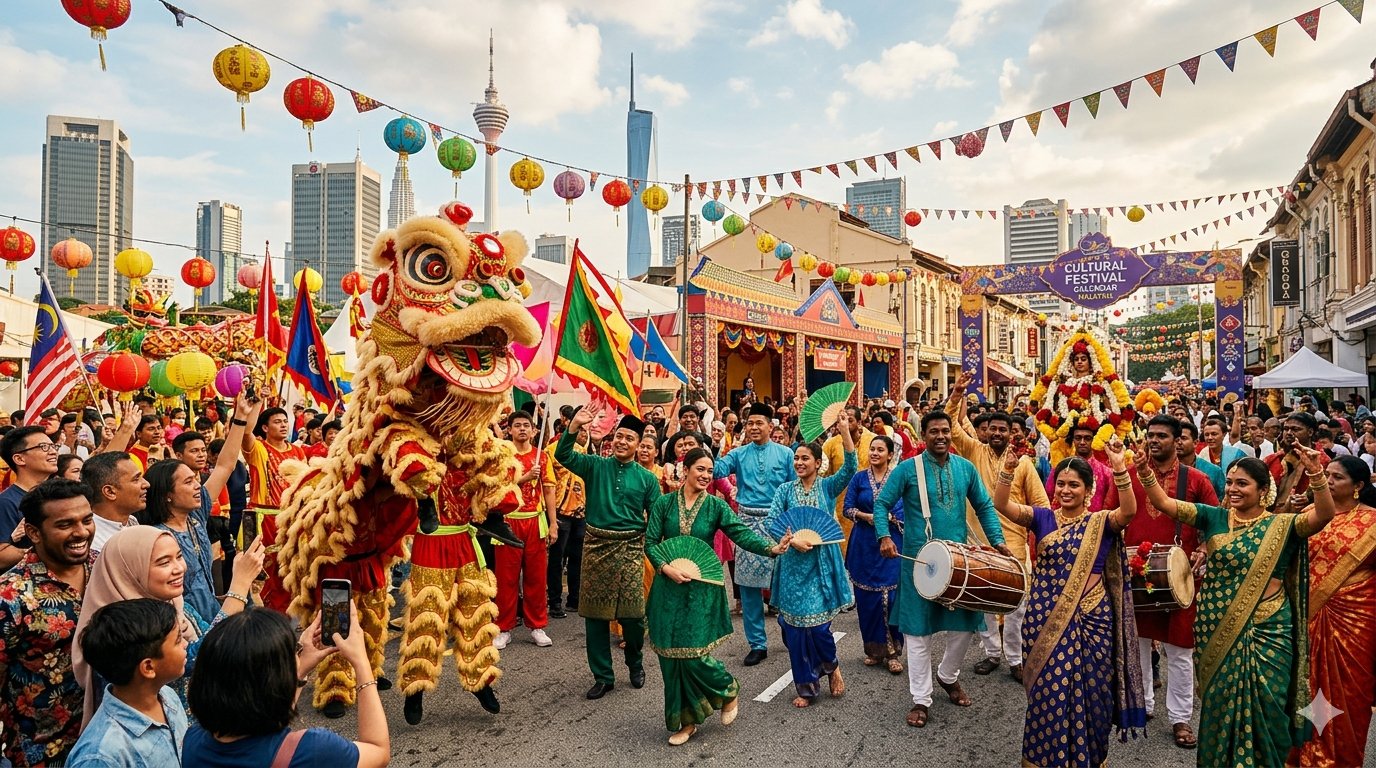
At different times of the year, streets fill with Chinese New Year decorations, mosques and homes prepare for Hari Raya, Hindu communities celebrate Deepavali, Sabah marks Kaamatan, Sarawak celebrates Gawai Dayak, and cities across the country host cultural performances, food festivals, traditional arts events and public celebrations.
Some festivals are religious. Others are tied to harvest traditions, ethnic identity, national history, food, music or the performing arts.
That diversity is one of the defining features of Malaysia’s cultural landscape.
Tourism Malaysia describes major celebrations such as Hari Raya Aidilfitri, Chinese New Year, Vaisakhi, Tadau Kaamatan, Hari Gawai, Deepavali and Christmas as festivals celebrated across the country, with open houses playing an important role in Malaysian festive culture.
The exact dates do not stay the same every year. Chinese New Year follows the lunar calendar, Islamic celebrations follow the Islamic calendar and some cultural festivals have fixed dates while others are organised around specific weekends or annual event programmes.
The calendar below uses 2026 dates where official dates are available, making it useful for anyone planning a trip, cultural outing or year of exploration in Malaysia.
January: Thaipusam and the Start of Malaysia’s Festival Year
January can be a relatively quiet month compared with the major festive periods later in the year, but it is not without important cultural events.
Thaipusam is one of the most significant Hindu celebrations observed by Malaysia’s Tamil Hindu community. The festival is particularly associated with the massive pilgrimage to Batu Caves in Selangor, where devotees undertake religious rituals and processions.
Because Thaipusam follows the Hindu lunar calendar, its Gregorian date changes each year.
The Batu Caves celebration has become one of Malaysia’s best-known cultural and religious spectacles, attracting devotees as well as visitors interested in witnessing the kavadi processions, decorated chariots and other traditions.
Visitors should remember that Thaipusam is first and foremost a religious observance. Crowds can be extremely large, and people attending as visitors should dress respectfully and follow instructions from organisers and authorities.
January can also be a good time to explore Malaysia’s museums, cultural centres, temples and heritage districts before the busier Chinese New Year period.
February: Chinese New Year
Chinese New Year is one of Malaysia’s biggest annual celebrations.
In 2026, Chinese New Year fell on 17 and 18 February. Tourism Malaysia lists the celebration nationally and notes that preparations can begin weeks before the festival itself.
The celebration is strongly associated with family reunions, festive meals, decorations, red packets, visits to relatives and friends, and traditional performances.
In many Malaysian cities, visitors will encounter lion and dragon dances, lanterns, red decorations and seasonal food.
Chinese New Year also illustrates an important part of Malaysian festive culture: the celebration often extends beyond the community observing it.
Open houses and visits between friends and neighbours are common features of Malaysian festive life. Tourism Malaysia notes that friends and relatives of different backgrounds may visit one another during the Chinese New Year period.
For visitors, George Town, Kuala Lumpur, Ipoh, Malacca and Johor Bahru can offer different experiences, ranging from temple celebrations to commercial-area decorations and community events.
The celebrations generally continue beyond the first two days, with the wider festive period traditionally extending towards the Lantern Festival or Chap Goh Mei.
March: Hari Raya Aidilfitri
March is often one of the most significant months on Malaysia’s cultural calendar when Hari Raya Aidilfitri falls during the month.
In 2026, Hari Raya Aidilfitri was observed on 21 March.
The festival marks the end of Ramadan and is a major celebration for Malaysia’s Muslim community.
The atmosphere begins before the actual celebration.
During Ramadan, bazaars appear in towns and cities, homes prepare traditional dishes and families make arrangements to return to their hometowns for the festive period.
When Hari Raya arrives, Muslims attend prayers, visit family members, seek forgiveness and enjoy meals together.
One of the most recognisable Malaysian traditions is the open house, where families welcome relatives, friends and neighbours into their homes.
Visitors may encounter traditional dishes such as rendang, ketupat, lemang and various kuih.
The festive period also provides a chance to see Malaysians wearing traditional clothing such as baju Melayu and baju kurung.
For travellers, March can therefore provide a particularly strong introduction to Malay cultural traditions, although travel demand can increase significantly around the holiday.
April: Cultural Events Beyond the Major Holidays
April does not have one single national cultural festival that dominates the entire country in the way Chinese New Year or Hari Raya can.
Instead, it is a useful month for exploring Malaysia’s regional culture.
This is a good time to visit heritage areas such as George Town, Melaka and Kuala Lumpur’s historic districts, where traditional architecture, food, religious sites and museums provide a broader picture of the country’s cultural development.
Malaysia’s cultural calendar also includes exhibitions, arts programmes, food events and community celebrations throughout the year.
That distinction is worth remembering.
Malaysia’s culture is not something that appears only during public holidays. Traditional performances, craft demonstrations, food markets and cultural exhibitions operate throughout the year.
May: Kaamatan, Wesak and Hari Raya Aidiladha
May is one of the busiest months on Malaysia’s cultural calendar.
In 2026, Hari Raya Aidiladha fell on 27 May. Tourism Malaysia describes it as the culmination of the Hajj pilgrimage and notes the observance of prayers and animal sacrifice among Muslims.
May is also particularly important in Sabah because of Kaamatan, the harvest festival associated especially with the Kadazan-Dusun community.
The official 2026 public-holiday schedule lists 30 and 31 May for Kaamatan in Sabah and Labuan.
The main Kaamatan celebration is strongly associated with the Kadazan Dusun Cultural Association complex in Penampang, Sabah.
Traditional music, dancing, costumes, food and cultural competitions form part of the wider celebration.
Another major religious observance is Wesak Day.
In 2026, Wesak Day fell on 31 May. Tourism Malaysia identifies Wesak as an important Buddhist celebration commemorating the birth, enlightenment and passing of Gautama Buddha. Large celebrations are held at Buddhist temples, including Maha Vihara in Brickfields, Kuala Lumpur, and Kek Lok Si in Penang.
The proximity of these festivals demonstrates just how quickly Malaysia’s cultural calendar can change from one tradition to another.
June: Gawai Dayak and Sarawak’s Cultural Season
June is particularly important in Sarawak.
Hari Gawai Dayak is celebrated on 1 and 2 June in Sarawak. The 2026 federal holiday schedule confirms these dates, while Tourism Malaysia also lists Hari Gawai for 1–2 June.
Gawai is associated with the Dayak communities of Sarawak and has strong connections with harvest traditions, family gatherings, food, music and cultural identity.
The celebration can include traditional dancing, music, traditional clothing and visits to longhouses.
For travellers, Sarawak offers an opportunity to experience cultural traditions that are very different from those found in Peninsular Malaysia.
June is also a strong month for cultural tourism more broadly.
In 2026, the Rainforest World Music Festival was held from 26 to 28 June at Sarawak Cultural Village in Kuching. Tourism Malaysia describes the three-day event as a celebration of world music featuring workshops, cultural and craft displays, food stalls and evening performances.
Another significant 2026 event was the Malaysia Cultural Festival @ Perak, held from 25 to 28 June in Ipoh, featuring performances and cultural showcases representing all 14 states, alongside traditional games, crafts and heritage food.
July: Citrawarna and the Colours of Malaysia
July is a good month to experience Malaysia’s culture through large-scale public events.
One of the major events in 2026 was Citrawarna 2026, held from 24 to 26 July at Dataran Merdeka in Kuala Lumpur.
Tourism Malaysia described the event as a signature Visit Malaysia 2026 celebration built around the theme “Colours of Malaysia: The Rhythm. The Soul. The Nation.” The programme brought together elements of Malaysia’s cultures, arts and heritage, with a major parade on 25 July.
Citrawarna is different from a religious festival.
Rather than representing one community’s religious observance, it is a national cultural showcase intended to present Malaysia’s diversity through performances, costumes, music and heritage.
July is also a good time to look beyond Kuala Lumpur.
State-level cultural events throughout Malaysia can offer a closer look at local traditions without the scale of the major national celebrations.
August: Merdeka and Cultural Identity
August brings the country towards Hari Kebangsaan, or National Day, on 31 August.
National Day is a public holiday and is primarily a national celebration rather than an ethnic or religious festival.
However, it has become an important part of Malaysia’s cultural calendar.
In the weeks leading up to 31 August, buildings, shopping centres, public spaces and homes often display the Malaysian flag and national colours.
Parades, performances and community programmes are organised in different parts of the country.
For travellers interested in Malaysian identity, August provides an opportunity to understand how the country’s many cultural traditions are incorporated into a broader national identity.
It is also worth distinguishing Hari Kebangsaan from Malaysia Day, which takes place on 16 September.
September: Malaysia Day and a Month of Cultural Events
September is increasingly important for cultural tourism.
Malaysia Day falls on 16 September, commemorating the formation of Malaysia in 1963.
In 2026, the cultural calendar included several significant events around the month.
The Malaysia Cultural Festival was held from 11 to 16 September at Titiwangsa Lake Gardens in Kuala Lumpur, organised by the Ministry of Tourism, Arts and Culture. Its programme included cultural and arts performances, heritage food, traditional handicrafts, traditional games and interactive cultural demonstrations. Admission was free.
Another distinctive event was Keretapi Sarong 2026, held on Malaysia Day.
The 2026 edition marked the movement’s 10th anniversary and expanded simultaneously to 10 Malaysian cities. In Klang Valley, participants gathered at multiple public-transport stations before travelling together towards a destination revealed on the day.
September also featured the Borneo Cultural Festival in Sibu, the Borneo Arts Festival in Labuan and other arts and cultural programmes listed by Tourism Malaysia.
For anyone interested in contemporary Malaysian culture, September is therefore much more than a single public holiday.
October: Deepavali
October and November are particularly important for Malaysia’s Hindu community because of Deepavali, also known as Diwali or the Festival of Lights.
The exact date changes according to the Hindu calendar.
Deepavali is celebrated with prayers, family gatherings, traditional food, new clothing, oil lamps and colourful kolam decorations.
Indian communities across Malaysia prepare for the celebration well in advance.
Shopping areas, homes and public spaces can become particularly colourful during the season, with decorations and cultural programmes appearing across cities.
Little India districts in Kuala Lumpur, George Town, Ipoh and other towns can be especially interesting places to visit during the festive period.
However, Deepavali is a religious celebration, so visitors should treat temples and religious ceremonies respectfully rather than viewing them purely as tourist attractions.
November: George Town and the Arts
November brings another side of Malaysian cultural life into focus.
Beyond religious celebrations, the country has a growing calendar of literary, arts, music and heritage festivals.
The official Malaysia Calendar of Events 2026 lists the George Town Literary Festival in November alongside other cultural programmes, including an ASEAN Festival and traditional-food and heritage events.
George Town is particularly suitable for visitors who want to explore culture through literature, architecture, food and the arts.
The city itself is a major heritage destination, and its cultural programme extends beyond the traditional festival format.
This is one reason travellers should not limit a Malaysia festival trip to major religious celebrations.
Cultural life also exists in galleries, theatres, literary events, museums, workshops and community spaces.
December: Christmas and Year-End Celebrations
December brings the country’s major year-end celebrations.
Christmas Day is observed on 25 December and is included among Malaysia’s national public holidays.
Although Christmas is a Christian celebration, its presence is visible across the country through church services, family gatherings, decorations and public festivities.
Shopping centres in Kuala Lumpur and other major cities often create large Christmas displays, while churches hold religious services and community events.
Sabah and Sarawak also have substantial Christian populations, so Christmas can have a particularly strong community presence in parts of East Malaysia.
December is also a popular travel period, meaning hotels, transport and attractions can become busier around the year-end holidays.
Malaysia’s Cultural Calendar at a Glance
For a quick reference, the major 2026 celebrations and cultural events include:
| Month | Festival or Cultural Event | 2026 Date / Period | Main Location |
|---|---|---|---|
| January | Thaipusam | Date varies annually | Batu Caves, Selangor and elsewhere |
| February | Chinese New Year | 17–18 February | Nationwide |
| March | Hari Raya Aidilfitri | 21 March | Nationwide |
| May | Hari Raya Aidiladha | 27 May | Nationwide |
| May | Kaamatan | 30–31 May | Sabah, especially Penampang |
| May | Wesak Day | 31 May | Nationwide |
| June | Gawai Dayak | 1–2 June | Sarawak |
| June | Rainforest World Music Festival | 26–28 June | Kuching, Sarawak |
| July | Citrawarna | 24–26 July | Kuala Lumpur |
| August | National Day | 31 August | Nationwide |
| September | Malaysia Cultural Festival | 11–16 September | Kuala Lumpur |
| September | Malaysia Day | 16 September | Nationwide |
| September | Keretapi Sarong | 16 September | Multiple Malaysian cities |
| October/November | Deepavali | Date varies annually | Nationwide |
| November | George Town Literary Festival | November | George Town, Penang |
| December | Christmas | 25 December | Nationwide |
Dates for religious and lunar-calendar celebrations should be checked again before making travel arrangements because they can differ from one year to another.
Malaysia’s official government calendar distinguishes between federal and state public holidays, so a holiday or celebration observed in one state may not apply across the whole country.
The Festivals Worth Travelling For
If you are planning a trip specifically around Malaysian culture, there are several different ways to approach the calendar.
For Malay and Islamic culture, consider travelling around Hari Raya Aidilfitri or Hari Raya Aidiladha.
For Chinese Malaysian culture, Chinese New Year provides one of the most visible periods of the year, particularly in cities with established Chinese communities.
For Indian Malaysian culture, Deepavali and Thaipusam provide opportunities to see different aspects of Hindu religious and cultural traditions.
For Sabah’s indigenous cultures, Kaamatan is one of the most important dates on the calendar.
For Sarawak’s Dayak cultures, Gawai offers an important cultural experience, while the Rainforest World Music Festival provides a broader international music and arts programme.
For national cultural diversity, events such as Citrawarna and the Malaysia Cultural Festival bring traditions from different parts of the country together.
The best choice therefore depends on what kind of cultural experience you want.
How to Experience Malaysian Festivals Respectfully
Cultural tourism works best when visitors understand that they are entering someone else’s tradition rather than simply watching a show.
Dress appropriately when visiting religious sites.
Ask before photographing people, particularly during religious ceremonies.
Follow instructions around temples, mosques, churches and other places of worship.
Do not enter restricted areas simply because they appear interesting.
If invited to an open house, follow the host’s lead.
And try the food.
Food is one of the easiest ways to understand Malaysia’s cultural diversity, particularly during major celebrations.
A festival meal can reveal family traditions, regional ingredients and historical influences that are difficult to understand from a guidebook alone.
Why Malaysia Has Such a Diverse Festival Calendar
Malaysia’s festival calendar reflects the country’s complex population history.
Malay, Chinese, Indian, Indigenous and other communities have developed their own traditions while also sharing the same cities, workplaces, schools and neighbourhoods.
That produces something distinctive.
A Malaysian calendar can move from Chinese New Year in February to Hari Raya in March, Kaamatan and Wesak in May, Gawai in June, national celebrations in August and September, Deepavali later in the year and Christmas in December.
The festivals are different, but they exist within the same national calendar.
Open houses are one particularly Malaysian example of this interaction.
A festival may belong primarily to one religious or ethnic community, yet friends, neighbours and colleagues from other backgrounds may participate in visits, meals and greetings.
That everyday interaction is an important part of what makes Malaysia’s festival culture distinctive.
Planning Your Malaysia Festival Trip
If you are travelling specifically for a festival, do not wait until the festival week to organise everything.
Check the official festival dates first.
Then look at transport, accommodation and local event schedules.
For major celebrations such as Chinese New Year, Hari Raya, Kaamatan and Gawai, travel demand can be significant.
East Malaysia requires additional planning because Sabah and Sarawak are separated geographically from Peninsular Malaysia.
For events in Kuala Lumpur, public transport can sometimes be useful because major cultural celebrations may attract large crowds and road closures.
Tourism Malaysia maintains a regularly updated events calendar, while the Malaysian government publishes official public-holiday information. These are useful starting points when checking dates before booking flights or accommodation.
A Year of Malaysian Culture
There is no single “best” month for experiencing Malaysia’s culture.
That is probably the most useful lesson from the country’s festival calendar.
February offers Chinese New Year. March brings Hari Raya Aidilfitri. May brings Kaamatan and Wesak alongside Hari Raya Aidiladha. June brings Gawai and major Sarawak cultural events. July brings Citrawarna. August and September focus attention on Malaysian national identity and cultural diversity. Later in the year come Deepavali, literary and arts festivals, and Christmas.
And between these major celebrations are hundreds of smaller events, exhibitions, food festivals, performances and community programmes.
Tourism Malaysia’s Visit Malaysia 2026 campaign is built around a year-long programme of more than 300 events, highlighting the country’s multicultural identity, artistic heritage and festive traditions.
That means the country’s cultural calendar is much larger than the handful of festivals that usually appear in international travel guides.
Final Thoughts
Malaysia’s festivals offer more than colourful photographs.
They provide a way to understand how different communities have shaped the country and how traditions continue to change while remaining connected to their roots.
Whether you are watching a lion dance in Kuala Lumpur, following a Kaamatan celebration in Sabah, experiencing Gawai in Sarawak, visiting a Deepavali open house or joining a national cultural event, the experience is different from simply visiting a museum.
You are seeing culture being practised in real time.
For travellers, that can make a Malaysia trip considerably more memorable.
The dates will change. The venues will change. New festivals will appear and established ones will evolve. But the underlying diversity of Malaysia’s cultural calendar remains one of the country’s most interesting reasons to visit.
For more guides to Malaysian culture, travel, food, lifestyle, heritage and local experiences, explore Malaysiawide.com.
Important: Festival dates and event programmes can change. Religious festivals may follow lunar or religious calendars, while individual cultural events can change their dates or venues. Always confirm the latest information with the official organiser or Tourism Malaysia before making travel arrangements.
Sources: Tourism Malaysia; Ministry of Tourism, Arts and Culture Malaysia (MOTAC); Government of Malaysia; Malaysia 2026 Calendar of Events.
Place Your Advert Here
Partner with us to promote your brand to high-intent audiences exploring destinations throughout Malaysia.
Get Started